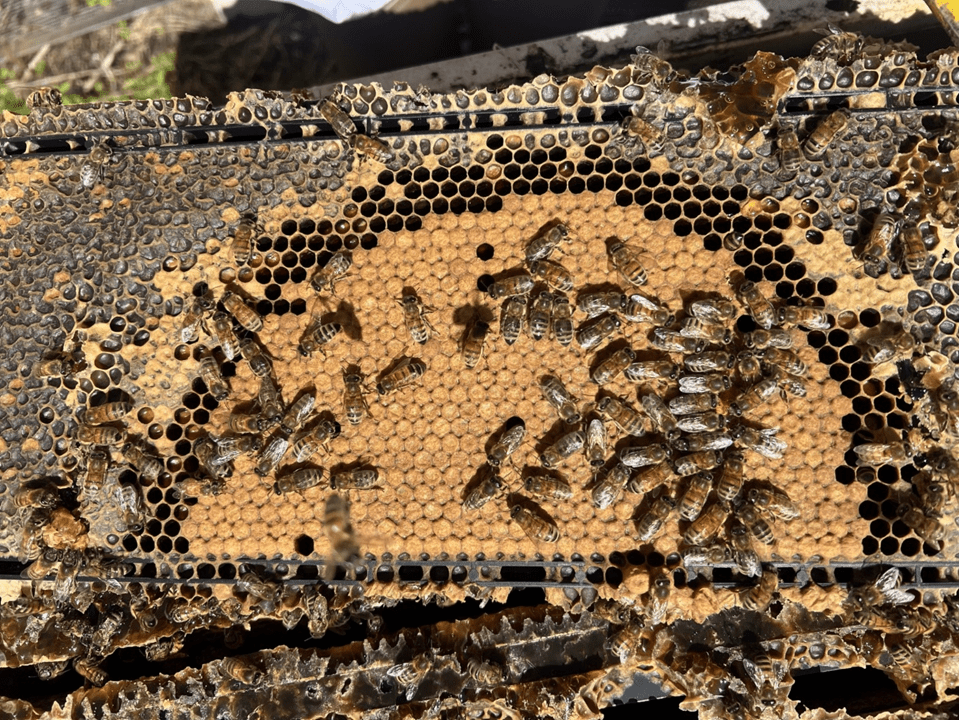
The bee season has officially begun with first hive inspections on a few sunny days recently (ahead of some very wintry weather with rain and wind chill). Coming off the back of a very dry summer and autumn, and still below-average winter rains, the bees are actually doing quite well.
I ensured the bees were left with ample stores at the end of autumn, knowing that it might be a lean start to the upcoming spring-summer season if the drought continues. The long-range forecasts don’t show anything above average for rain for western Victoria and southern Australia, so my planning has stood the bees in good stead.
The first things a beekeeper checks as a hive comes out of winter (and during winter, too) is the weight of the hive. A hefty hive means good amounts of honey stores, and a hive that has plentiful reserves to cope with typical cold and rainy weather through winter and well into spring. During winter, bees consume honey to create heat to keep the hive warm and the brood healthy. In spring, they also need to keep the hive warm, but additionally have more and more mouths to feed as the queen bee kicks into action to grow the colony – typically laying 1500 – 2000 eggs per day!
Next up is to check the actual quantity of honey in the hive upon opening it for the first time since late autumn. How much honey is there? Is there enough? Are the bees bringing in new nectar and new stores of pollen?
I also want to know about the actual health and robustness of the colony. How much brood is there? Is it healthy? Can I spot the queen (usually every time!)? Are there any drones present in the hive yet? Drones (male bees) in the hive indicate breeding season is imminent, and with that comes swarming risks. Drones don’t over-winter in the hive – they consume too much food and do no work! – and they are kicked out by the worker bees as the cold weather sets in for winter.
Varroa mite (one of the most devastating pests of honey bee hives) is now in Victoria in several locations, so I do tests on the hives to check for any mites (none yet!) using an alcohol wash with methylated spirits, and a jar with filter-mesh to scan a sample of bees from the brood nest for mites.
Other important checks to make of the hive are to note how large is the brood nest? Has the queen been laying over winter, or has she had a brood-break? Is the brood pattern a dense cluster of cells, or is the laying pattern spotty, indicating a queen that may need replacing, or other issues in the hive.
Lastly, is the hive expanding at a rapid rate for spring yet, and do they need more space (additional box and empty frames) for the queen to lay eggs, and for the workers to store nectar and pollen. Or, do the bees need supplementary feeding if their numbers are increasing at a rate faster than they can bring in new food and are using up their stores rapidly.
A hive inspection tells a beekeeper so much about the internal environment of the bees but also how they are responding to the environmental conditions around them, and dictates ongoing management decisions throughout the season. Keep on buzzing!
[photo: hive frame showing brood (tan colour) cells with an arc of honey stores around it.]
 BUUKAAR WAARUUNG Boutique Apiary & Artisan Honey