Is raw honey actually a thing?
This is a question that I was asked the other day, so to answer the question, what better way than here Follow The Buzz.
First, a bit of background …
Honey bees (that’s the European honey bee that is commonly seen buzzing around gardens locally) keep their hive at a very precise temperature to support the development of brood (baby bees) and to facilitate the production of honey from flower nectar (lots of bee wings fanning like mad to reduce moisture from around 80% to 20% so the honey can’t ferment – how amazing is that?!).
The ambient temperature of a hive is around 33 degrees Celsius; therefore, so is the honey that you and I enjoy so much. Unless it isn’t! This is where we come to the concept of raw honey, and what constitutes authentic raw honey – or not!
Why is raw honey better?
Raw honey is extracted from the hive in such a way to preserve the original quality of the honey as it is in the hive. Raw honey contains all the enzymes and micronutrients of the original honey, as well as its physical characteristics and its flavours and aromas.
Tell me more…
Extraction of the honey from the hive is critical to either preserve or degrade the ‘rawness’ of the honey. Most importantly, raw extraction means not raising the temperature of the honey during extraction to beyond that of the natural hive environment. All my honey is absolutely raw! It’s cold-extracted using the technique of manual uncapping of the wax honeycombs without using a hot knife that ‘cooks’ the upper layers of honey in the cells, which potentially destroys the enzyme components of the honey. The honey from my hives is then spun out using a centrifugal extractor, and minimally filtered, which preserves pollen components of the honey.
Honey produced on a large scale, where many different beekeepers supply what’s called a ‘re-packer’, requires the use of pasteurization in the same way as milk delivered to a dairy factory is pasteurised. Pasteurization is a brief high-temperature treatment, which does alter the taste and raw characteristics of honey, but nonetheless is required in industrial situations.
What else?
Honey produced at an industrial scale is often also micro-filtered, which removes most of the pollen, and, in combination with pasteurization, adversely affects the way honey naturally ‘candies’ or crystallises over time. Think of supermarket honey that stays runny and rarely solidifies.
Taste the difference!
Raw honey as like a fine wine. There are so many subtle and characteristic aromas and flavours that are conserved in raw honey that are absent in mass-produced honey. Depending upon the flora on which the bees foraged, when opening a jar, you may detect aromas of vanilla, or green grass, or a mossy forest, or even lanolin! Flavours are complex and much more than just ‘sweet’, with notes such as buttery, caramelly, minty (menthol), fruity, nutty or earthy. Give BUUKAAR WAARUUNG raw honey a go – your tastebuds will be delighted!
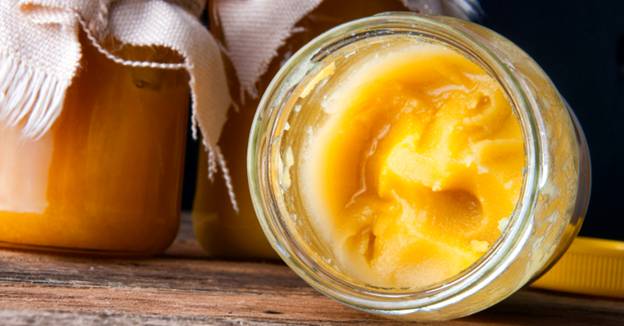
Raw honey naturally ‘candies’ or crystallises over time.
 BUUKAAR WAARUUNG Boutique Apiary & Artisan Honey